What If Your Pet Could Tell You They’re Safe—Without Saying a Word?
Have you ever left the house wondering if your dog is pacing by the door or if your cat’s hiding under the bed again? I used to worry every time I stepped out—until I started using pet safety monitoring. It didn’t just change how I see my pets’ safety; it changed how I experience peace of mind. This isn’t about fancy tech—it’s about knowing, in real time, that your furry family member is calm, close, and okay. Let me share how it quietly transformed my daily life. It wasn’t a crisis that pushed me toward this. No emergency, no dramatic vet bill. Just a slow build of small worries—chewed slippers, restless energy when I got home, the way my dog would whine at the window for what felt like hours. I began to realize that while I was out living my day, my dog was living his own version of it—one filled with silence, loneliness, and maybe a little anxiety. I wanted to know what happened when I wasn’t there. Not because I didn’t trust him, but because I loved him. And love means wanting to understand, even when words aren’t an option.
The Moment I Knew Something Had to Change
It was a rainy Tuesday afternoon when I came home to find one of my favorite loafers completely destroyed. Not just chewed—shredded. The leather was in pieces, the sole detached, and there, sitting in the middle of the wreckage, was Max, my three-year-old golden retriever, looking more heartbroken than mischievous. His tail was low, his ears drooped, and he didn’t even try to greet me. That’s when it hit me: this wasn’t about a shoe. It was about him. He wasn’t acting out of defiance—he was struggling. I could see it in his eyes. That moment wasn’t just frustrating; it was a wake-up call. I had been leaving him alone for four or five hours at a time, thinking he was fine because he had toys, water, and a cozy bed. But clearly, something deeper was going on.
I started paying closer attention. On days when I left early for work, I’d come home to find the trash tipped over, a trail of paw prints across the kitchen floor, or the curtains slightly torn. These weren’t random acts—they were patterns. And each time, Max looked more withdrawn. I began to wonder: was he anxious? Bored? Missing me more than I realized? I didn’t want to just clean up the mess anymore. I wanted to prevent it. But how could I help him if I didn’t know what he was doing when I wasn’t there? That’s when I started searching for answers. I looked into dog walkers, pet sitters, even considered switching jobs so I could be home more. But life doesn’t always allow for big changes. What I needed was something small—something that could fit into our routine, not disrupt it. That’s how I found pet safety monitoring.
Discovering Pet Safety Monitoring: A Solution That Felt Right
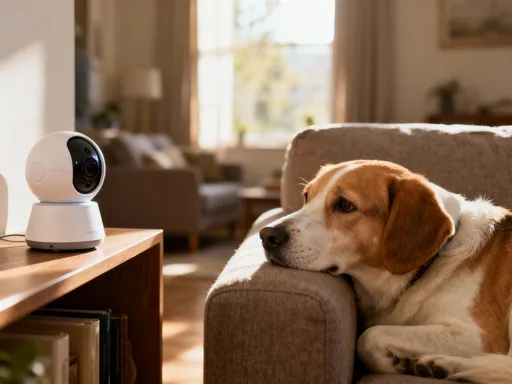
The first time I saw a smart pet camera, I’ll admit—I was skeptical. It looked like just another gadget, another app to download, another device to charge. I didn’t want to feel like I was spying on my dog. I wanted to feel connected to him. But the more I read, the more I realized this wasn’t about surveillance. It was about presence. So I took a chance and bought a simple, well-reviewed pet camera. Setting it up took less than ten minutes. I placed it in the living room, angled toward his favorite napping spot, and synced it with my phone. Within minutes, I was looking at a live feed of Max, curled up on the rug, sound asleep.
That first glimpse changed everything. It wasn’t just seeing him—it was knowing. Knowing he was okay. Knowing he wasn’t pacing. Knowing he wasn’t stressed. And the best part? I could check in anytime, from anywhere. Waiting in line at the grocery store? I pulled out my phone and saw him stretching after a nap. In a work meeting with a five-minute break? I watched him sniff around the room, tail wagging. It wasn’t constant monitoring—it was peace of mind on demand. The app was simple, intuitive, and didn’t require me to be tech-savvy. No confusing settings, no complicated menus. Just a clear video feed, a microphone, a speaker, and a button to talk to him. I didn’t feel like I was using technology. I felt like I was staying close to my dog, even when I was miles away.
Filling the Waiting Time: How Boredom Became Bonding
At first, I just watched. But soon, I started using the two-way audio feature. I’d say his name, and within seconds, his ears would perk up. He’d look right at the camera, tail starting to wag. I’d say, “Hey buddy, Mommy’s on her way,” and he’d bark once, like he understood. Those little moments became my favorite part of the day. I wasn’t just checking in—I was connecting. And that made all the difference.
Then I discovered the treat dispenser feature. Some pet cameras come with a built-in treat launcher you can control from your phone. I loaded it with his favorite mini biscuits and started using it during the times I knew he got restless—usually around 3 p.m., when the house was quiet and the sun hit the floor just right. I’d watch him lie down, get up, circle, lie down again. Then, I’d press the button. A treat would pop out, and he’d scramble to get it. Within days, he started going to the camera at that time, sitting and waiting. It became our routine. I wasn’t just managing his boredom—I was building a new kind of bond. One that didn’t depend on me being in the same room.
I even started playing recorded sounds through the speaker—soft music, calming white noise, and once, a recording of my voice saying, “It’s okay, Max. I’ll be home soon.” I played it when I left the house, and over time, I noticed he settled faster. He didn’t rush to the door. He didn’t whine. He’d find his bed and close his eyes. That small act—just hearing my voice—gave him comfort. And it gave me something too: the feeling that I wasn’t completely gone. I was still there, in a way. Not physically, but emotionally. And that mattered.
Real-Life Benefits: Beyond Just Watching
Of course, the peace of mind was the biggest benefit. But I started noticing other things—small, subtle changes in Max’s behavior that I might have missed otherwise. One afternoon, I saw him limping slightly after jumping off the couch. It wasn’t dramatic, but it was enough to catch my eye. I made a mental note and watched him over the next day. The limp didn’t go away. Thanks to the camera, I caught it early. A quick vet visit confirmed a minor sprain, nothing serious, but if I hadn’t seen it, it could have worsened. I felt grateful—not just for the camera, but for the awareness it gave me.
Another time, I noticed he wasn’t eating as quickly as usual. He’d sniff his food, take a bite, then walk away. I watched him over two meals and realized he was eating about half his usual amount. Again, nothing alarming on the surface, but out of character for him. I called the vet, described what I’d seen, and they suggested bringing him in. Turns out, he had a small dental issue that was making chewing uncomfortable. Fixed in one visit. No pain, no infection, just a quick cleaning. But without that window into his day, I might not have noticed until it became a bigger problem.
And then there were the little insights—learning that he actually napped most of the time I was gone, that he preferred the sunlit corner over his bed, that he liked to rearrange his toys in a certain order. These weren’t urgent issues. They were just part of who he was. But understanding them helped me care for him better. I moved his bed to the sunny spot. I rotated his toys more often. I adjusted his feeding schedule to match his natural rhythm. The camera didn’t just show me what he was doing—it helped me see him more clearly.
How It Changed Our Daily Rhythm
Before the camera, I felt guilty anytime I left the house for more than an hour. A quick grocery run felt like a betrayal. A coffee with a friend turned into a countdown: how long can I stay before he gets anxious? But with the camera, that guilt started to fade. I could leave knowing I could check in anytime. I took longer walks. I stayed at work a little later when needed. I even started doing online yoga classes without rushing home mid-session to see if he was okay.
My work-from-home breaks changed too. Instead of wondering what he was doing, I could glance at my phone and see him napping peacefully. That small reassurance let me focus better. I wasn’t distracted by worry. I was present in my work, knowing he was safe and calm. And when I did take a break, I could use it to connect—talking to him, giving him a treat, just saying hello. Those moments became part of my self-care, not just his.
Training improved too. I used to struggle with consistency—forgetting to reward good behavior, missing the exact moment he did something right. But with the camera, I could watch him in real time and reinforce behaviors immediately. If he stayed on his mat instead of jumping on the couch, I could praise him through the speaker. If he greeted me calmly when I came home, I could give him a treat right away. Over time, he learned faster. Not because the camera trained him, but because it helped me be a better trainer. It bridged the gap between intention and action.
Privacy, Simplicity, and What I Learned Along the Way
Of course, I had concerns at first. Was I invading his privacy? Was I relying too much on technology? What if the data wasn’t secure? These were valid questions. I did my research. I chose a brand with strong privacy policies, end-to-end encryption, and no third-party sharing. I made sure the camera didn’t record constantly—only when I was viewing or when motion was detected. And I set boundaries for myself. I didn’t check in every ten minutes. I didn’t obsess over every movement. I used it as a tool, not a crutch.
What I learned is this: technology doesn’t replace love. It supports it. The camera didn’t take the place of walks, cuddles, or playtime. It didn’t mean I cared less because I wasn’t physically there. It meant I cared enough to find a way to stay connected. I still make time for us—long walks, training sessions, lazy Sundays on the couch. But now, when life gets busy, I don’t feel like I’m failing him. I feel like I’m still part of his day, even when I’m not in the room.
I also learned to trust my instincts. There were times when the camera showed him resting, but something in my gut said he wasn’t quite right. So I’d come home early. And sometimes, he was fine. But other times, he was coming down with a fever, or had eaten something he shouldn’t. The tech gave me data, but my love gave me intuition. And both are important. The best care happens when we balance the two—when we use tools to enhance, not replace, our connection.
A New Kind of Peace: More Than Just Monitoring
What started as a way to stop the shoe-chewing turned into something much bigger. It gave me a deeper understanding of my dog. It gave me confidence that I was meeting his needs. And it gave me a quiet, steady sense of peace—one that didn’t depend on being perfect or always available. It’s the kind of peace that lets you breathe a little easier, knowing that even when you’re apart, you’re still together in spirit.
This isn’t about watching your pet every second. It’s about knowing you can. It’s about having that safety net, that moment of reassurance when you need it most. It’s about turning empty hours into moments of connection. And it’s about realizing that love doesn’t have to be loud to be strong. Sometimes, it’s just a voice through a speaker, a treat from across the room, a glance at a screen that says, “You’re okay. I’m here.”
If you’ve ever wondered what your pet does when you’re gone, if you’ve ever felt that pang of worry as you close the door behind you, I want you to know there’s a way to feel closer. Not because technology replaces presence, but because it can extend it. It can hold space for love, for care, for calm. And in a world that moves fast and demands so much, that’s a gift—not just for your pet, but for you. Because when your heart is at home, you can truly be present wherever you are.