Tired of Stressing About Your Kids’ Safety When You’re Not Home? Here’s How We Found Peace of Mind
Imagine being at work, halfway through a meeting, when your phone buzzes with a live alert—your front door just opened. Your heart jumps. Was it the babysitter? A package delivery? Or something worse? We’ve all been there, wondering if our home and family are truly safe. I used to carry that low-level worry all day—until we installed a smart home monitoring system that didn’t just watch our house, but truly understood our life rhythm. It wasn’t about high-tech specs; it was about trust, clarity, and reclaiming mental space. Now, I don’t just feel safer—I am safer, and so much more present in my own life.
The Daily Anxiety No Parent Talks About
Let’s be honest—no one wants to admit how often they worry. As mothers, we’re supposed to be strong, organized, calm. But behind closed doors, many of us carry a quiet hum of anxiety about our children’s safety when we’re not home. It starts small: Did the after-school bus drop them off on time? Is the babysitter actually there yet? Did someone forget to lock the back door after letting the dog out? These aren’t rare, dramatic fears. They’re the everyday thoughts that loop in our minds while we’re trying to focus on a work call or finish grocery shopping.
I remember one afternoon, I got a text from my son’s school saying dismissal was delayed due to a staff meeting. I quickly called the babysitter to let her know pickup would be later. But she didn’t answer. No call back. No text. For 20 minutes, I sat at my desk, stomach in knots. Was she even at the house? Had she left to pick him up early? Was he walking home alone? By the time she called—she’d just been in the backyard with the kids—I was already picturing worst-case scenarios. That moment wasn’t about blame. It was about the lack of control. We love our kids fiercely, and that love comes with responsibility. But it shouldn’t come with constant fear.
Before we made any changes, I’d catch myself doing little things—calling the house just to hear the answering machine click, asking my daughter five times if she locked the door after school, texting the nanny every hour. It wasn’t helping anyone. It made me seem anxious, and honestly, it made me feel a little out of control. What I needed wasn’t more checking in. I needed real reassurance. I needed to know, without guessing or calling, that my family was safe. And I finally realized that peace of mind wasn’t something I had to just hope for. It was something I could build.
How We Accidentally Discovered a Better Way
The turning point came during that same school year. Another dismissal mix-up, another missed call to the babysitter. But this time, I didn’t just feel anxious—I felt angry. Angry at the system, angry at the lack of answers, angry that I had to choose between doing my job and worrying about my kids. That night, I sat down with my husband and said, “There has to be a better way.” We didn’t want cameras in every room. We didn’t want to record hours of footage we’d never watch. But we did want to know when someone entered the house, when the kids got home, and if anything unusual happened while we were away.
We started researching home monitoring systems—not the kind with complicated wiring or monthly fees that doubled our internet bill, but something simple, reliable, and designed for real family life. What surprised us was how many systems were built for tech lovers, not parents. They boasted about megapixels and cloud storage, but didn’t answer the real question: Can I trust this to keep my family safe without driving me crazy?
Then we found a system that worked differently. Instead of flooding us with alerts, it learned our routines. It knew when the kids came home from school, when the housekeeper arrived on Tuesdays, and when the dog walker usually stopped by. If something happened outside those patterns—like a door opening at 2 a.m.—we’d get an immediate notification. But if it was the babysitter arriving at 3:15 like always? No alert. No buzz. No panic. That was the moment I realized we weren’t just buying a gadget. We were buying back our calm.
It wasn’t about replacing human connection or supervision. We still talk to our caregivers, we still set rules, and we still teach our kids about safety. But now, we have a layer of support that works in the background, quietly confirming what we need to know. The shift wasn’t from chaos to high-tech perfection. It was from constant guessing to quiet confidence.
Why “Always-On” Cameras Aren’t the Answer
When we first looked into home monitoring, I assumed more cameras meant more safety. I imagined having a feed for every room, 24/7 recording, and alerts for every movement. But after testing a few systems, I realized something surprising: too much information can actually make you feel less safe. One system sent me a notification every time the cat jumped on the counter. Another alerted me when the tree outside cast a shadow that looked like a person. By lunchtime, I’d already ignored ten alerts—and missed the one that actually mattered.
And then there was the guilt. Watching live footage of my kids while I was at work made me feel like I was spying. Were they aware the camera was on? Did they feel like they had no privacy? I didn’t want to raise children in a surveillance zone. I wanted them to feel free and safe in their own home—not like they were being monitored every second.
We also struggled with poor video quality. One camera had a wide-angle lens, but the image was so blurry I couldn’t tell if it was my daughter or her friend at the door. Another system required a strong Wi-Fi signal, but our basement family room kept dropping the connection. I’d get an alert that the back door opened, but the video wouldn’t load. That’s not peace of mind—that’s frustration.
What we learned is that constant monitoring doesn’t equal control. In fact, it can do the opposite. When every little thing triggers an alert, you start to ignore them all. And when the video is unreliable, you can’t trust what you’re seeing. We didn’t need a system that watched everything. We needed one that knew what to show us—and when. The real goal wasn’t to see more. It was to worry less.
Matching Tech to Life: The Power of Block Time Planning
Once we let go of the idea that we needed to monitor every moment, we started thinking differently about how technology could support our family. That’s when we discovered block time planning—a simple way to organize our day into predictable chunks: family time, work time, school time, and rest. We realized our home system could adapt to these blocks instead of disrupting them.
For example, between 8 a.m. and 3 p.m., the kids are at school, and the house is usually empty except for the cleaning service on Tuesdays. So we set our system to send alerts only for unexpected entries during those hours. If the front door opens at 10 a.m. on a Wednesday? That’s a red flag. But on Tuesday at 10:15, when the housekeeper arrives? No alert. It’s expected. The system knows the difference.
In the afternoons, from 3 to 6 p.m., that’s our high-alert window. The kids come home, the tutor arrives, the dog walker stops by. We want to know when each of these events happens. So we turned on entry notifications for those hours. A simple ping tells me my daughter got home safely, or that the math tutor is already working with my son. No more calling to check. No more guessing.
Evenings are for family and downtime. We don’t need constant updates. But we do want to know if a door is left unlocked. So we set up a nightly check—around 9 p.m., the system sends a summary: all doors secured, no unusual activity. It’s like a digital goodnight kiss. And overnight? We silence non-urgent alerts. Only real emergencies—like a door opening or motion in the hallway—will wake us up.
This approach changed everything. Instead of the technology dictating our lives, it started following our rhythm. It wasn’t about being “on” all the time. It was about being smart when it mattered. And the best part? We didn’t have to be tech experts to set it up. Most modern systems have easy scheduling tools, and many even learn your patterns over time. All we did was think through our day—and let the system adapt.
Real-Life Moments That Proved It Works
The real test wasn’t during a crisis. It was in the small, everyday moments that used to fill me with doubt. Like the day the math tutor was supposed to arrive at 4 p.m. but didn’t show up until 4:25. I got a notification the moment she walked in. No need to call my son and interrupt his session. No wondering if she’d forgotten. I just knew.
Or the time my daughter called me after school saying she couldn’t find her backpack. I checked the app, pulled up the footage from 3:12 p.m., and saw her drop it by the kitchen counter. “It’s right where you left it,” I texted. She found it instantly. It wasn’t about surveillance—it was about support.
One rainy afternoon, I got an alert that the back door was open. I checked the camera and saw the dog walker had let the dog out but forgotten to latch the door behind her. I called her, she came back, and it was fixed in seconds. Without the alert, that door might have stayed open for hours—especially in bad weather. That’s not just convenience. That’s safety.
And then there was the morning I got a notification that the front door opened at 7:45 a.m.—before any of us were supposed to be up. My heart jumped. I pulled up the live feed and saw my teenage son, already dressed, heading out to catch an early bus for a school project. I sent him a quick “Have a great day!” text. He smiled at the camera and waved. It wasn’t a threat. It was just life. But knowing what was happening—instead of imagining the worst—made all the difference.
These aren’t dramatic rescue stories. There were no intruders, no break-ins, no emergencies. But that’s exactly the point. Peace of mind isn’t about preparing for disasters. It’s about removing the daily doubts that chip away at your calm. It’s about knowing your kids got home, your caregiver arrived, your house is secure—without having to ask, call, or worry.
How We Set It Up (And You Can Too)
If you’re thinking about setting up a system like this, I’ll be honest—it felt overwhelming at first. So many brands, so many features, so many price points. But once we focused on what we actually needed—simple entry alerts, reliable video, and smart scheduling—it became much clearer.
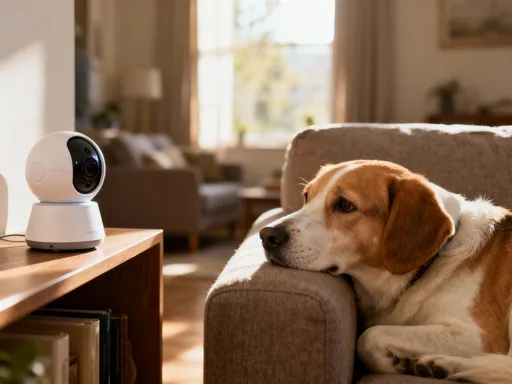
We started by choosing a system that was easy to install and had a clear mobile app. We didn’t want anything that required drilling holes or hiring a technician. Most modern kits are DIY-friendly and take less than an hour to set up. We placed a door sensor on the front and back entrances, and a camera near the main living area—pointed at the entryway, not into private spaces like bedrooms or bathrooms. Privacy matters, especially for teens.
We also made sure the system had customizable alert schedules. That was non-negotiable. We didn’t want to be woken up at 2 a.m. because the cat knocked over a plant. We wanted alerts only during key times—afternoon pickups, caregiver visits, and overnight for unexpected entries. Most apps let you set “active hours” and “quiet hours” with just a few taps.
Another important step was involving our older kids. We sat down as a family and explained why we were adding the system—not to spy, but to keep everyone safer and reduce stress. We showed them how to disarm the sensors when they came home, and we let them know which areas had cameras and why. They actually felt more secure knowing the house was monitored. One even said, “It’s like having a quiet guardian watching over us.”
We started small. First, we set up the front door sensor and tested it for a week. Then we added the camera. Then we fine-tuned the alert schedule. There was no pressure to do it all at once. And we kept the conversation open—if something felt off, we adjusted it. The goal wasn’t perfection. It was peace.
You don’t need to spend thousands or become a tech expert. Focus on simplicity, reliability, and privacy. Choose a system with good reviews, easy setup, and strong customer support. And remember—this isn’t about creating a fortress. It’s about creating confidence.
More Than Security: How It Changed Our Family Life
The biggest surprise wasn’t how safe we felt. It was how much calmer we became. I used to nag my kids about locking doors. Now, I get a notification if one is left open—and I can send a quick, light-hearted reminder: “Hey sweetie, the back door’s unlocked—can you click it shut?” No yelling. No frustration. Just a gentle nudge.
My husband and I argue less about who’s supposed to check the house at night. The system does it for us. We’ve stopped double-checking each other. There’s more trust, less tension. And during family time, I’m more present. I’m not mentally scrolling through a checklist of “what ifs.” I’m actually listening to my daughter’s story about her science project, or laughing at my son’s terrible jokes, because I’m not distracted by worry.
Our kids have also gained confidence. Knowing they can disarm the system, see who’s at the door, and even send a quick video message to us if they need something—it makes them feel capable. It’s not just about protection. It’s about empowerment.
And honestly? I feel more like myself. I used to carry that low-level anxiety like a backpack I couldn’t put down. Now, it’s lighter. I’m more focused at work, more patient at home, and more at ease in my own skin. That peace of mind didn’t come from luck. It came from making one thoughtful change—using technology not to complicate life, but to simplify it.
Security isn’t just about locks and alarms. It’s about feeling connected, in control, and truly present. We didn’t install a system to watch our house. We installed it to reclaim our calm, strengthen our family, and live with a little more confidence. And if you’re still carrying that quiet worry every day—know this: you don’t have to live with it. You can build something better. One smart choice at a time.