How I Fixed My Posture Without Braces or Pain
Slouching at my desk for years left me with constant back tension and neck stiffness. I tried everything—expensive pillows, posture apps, even reminders on my phone—but nothing stuck. Then I discovered that real posture improvement isn’t about forcing your spine into shape. It’s about retraining your body’s natural alignment. This is how I made lasting changes, step by step, with simple moves that actually work. What began as a personal quest to relieve discomfort turned into a deeper understanding of how the body functions when treated with awareness and consistency. The journey wasn’t dramatic, but it was transformative.
The Hidden Cost of Poor Posture
Poor posture is often dismissed as a minor aesthetic issue—a rounded back or a forward head that might not look ideal in photos. However, its consequences extend far beyond appearance. Over time, habitual slouching places strain on the musculoskeletal system, leading to chronic tension in the neck, shoulders, and lower back. This tension doesn’t just cause discomfort; it can reduce mobility, alter breathing patterns, and even affect energy levels. Many people report feeling fatigued by midday, not realizing that shallow chest breathing—common in slumped positions—limits oxygen intake and decreases mental clarity.
The human body is designed to move and support itself efficiently, but modern lifestyles challenge this natural design. Desk-based jobs require prolonged sitting, often in chairs that don’t support the spine’s natural curves. Add frequent smartphone use, where the head tilts forward and down, and the cumulative effect becomes significant. The head, which weighs approximately 10 to 12 pounds in a neutral position, exerts up to 60 pounds of pressure on the neck when bent forward at 60 degrees. This mechanical load forces muscles, ligaments, and joints to adapt, often in ways that compromise long-term health.
Importantly, poor posture should not be viewed as a personal failing. It is not a sign of laziness or lack of discipline. Rather, it is a biomechanical adaptation to repeated daily habits. The body learns to stabilize itself in the positions it assumes most frequently. When sitting hunched over a keyboard becomes routine, the brain begins to interpret this as the new normal. Muscles shorten or lengthen accordingly, joint angles shift, and sensory feedback changes. Over time, this altered alignment becomes automatic—so much so that standing “up straight” can feel unnatural or even uncomfortable. Recognizing this shift is the first step toward meaningful correction.
Why “Just Sit Up Straight” Doesn’t Work
Most people have been told at some point to “sit up straight,” often with good intentions. Yet for many, this advice brings only temporary relief, if any. The reason lies in the complexity of neuromuscular control. Willpower alone cannot override deeply ingrained movement patterns. When someone forces their spine into an upright position without addressing the underlying muscle imbalances or neural programming, the effort is unsustainable. Within minutes, the body reverts to its familiar, slumped posture—not out of defiance, but because it feels safer and requires less conscious effort.
The key to lasting change lies in neuromuscular re-education—the process by which the brain and nervous system learn to activate the right muscles at the right time. Posture is not simply a static position; it is a dynamic process involving continuous micro-adjustments made unconsciously. These adjustments are governed by sensory input from muscles, joints, and the inner ear. When poor habits dominate, the brain receives distorted feedback and responds accordingly. For example, someone with chronic forward head posture may perceive a neutral head position as being too far back, creating a mismatch between actual alignment and perceived alignment.
To correct this, the nervous system must be retrained through repetition and mindful practice. This means moving beyond quick fixes like posture braces, which can create dependency without fostering true muscle engagement. Instead, effective posture improvement involves gradual exposure to better alignment, combined with exercises that enhance body awareness and muscle activation. Over time, these new patterns become automatic, allowing improved posture to emerge not from effort, but from habit. The goal is not perfection, but consistency—a steady return to balanced alignment throughout the day.
The Core Connection: Stability Before Alignment
One of the most overlooked aspects of posture is core stability. Many assume that strong abs mean visible six-pack muscles, but true core strength involves deeper, stabilizing muscles such as the transversus abdominis, multifidus, and pelvic floor. These muscles act like an internal corset, providing foundational support for the spine. When they are weak or underactive, the body compensates by overusing superficial muscles, leading to tension in the lower back and increased risk of postural collapse.
Consider the pelvis, which serves as the base of spinal alignment. If the pelvis tilts excessively forward (anterior pelvic tilt) or backward (posterior pelvic tilt), it alters the curvature of the lumbar spine and disrupts overall posture. A neutral pelvis—neither tilted too far forward nor too far back—allows the spine to maintain its natural S-shape, reducing strain on discs and joints. Achieving this neutral position begins with awareness and simple movements like the pelvic tilt exercise. Lying on your back with knees bent, gently rock the pelvis upward (flattening the lower back against the floor) and then downward (arching slightly), learning to isolate and control this motion.
Another essential technique is abdominal bracing, which involves gently drawing the lower abdominal muscles inward without holding the breath. This activates the transversus abdominis and creates stability without creating stiffness. Practicing this engagement while sitting, standing, or walking helps integrate core support into daily life. It’s not about tightening forcefully, but maintaining a light, consistent activation—like keeping a door slightly ajar rather than slamming it shut. Over weeks of practice, this subtle engagement becomes second nature, supporting the spine during everyday activities and reducing reliance on passive structures like ligaments and joints.
Resetting Shoulder and Neck Position
Forward head posture and rounded shoulders are among the most common postural deviations seen today, especially among those who spend hours looking at screens. In this position, the head juts forward, the shoulders roll inward, and the upper back develops a slight hunch. While it may seem like a minor habit, this alignment places significant stress on the cervical spine and surrounding muscles. The trapezius and levator scapulae, muscles that run from the neck to the shoulders, become chronically tight and overworked, often leading to tension headaches and restricted neck movement.
Correcting this pattern begins with mobility exercises that restore range of motion and muscle balance. One effective drill is the chin tuck. Sitting or standing with the spine in a neutral position, gently glide the head straight backward, keeping the eyes level—imagine making a “double chin” without tilting the head up or down. This movement strengthens the deep neck flexors, which are often weak in individuals with forward head posture. Performing 10 to 15 repetitions several times a day can gradually improve neck alignment and reduce strain.
Equally important are scapular glides, which target the muscles around the shoulder blades. These include retraction (squeezing the shoulder blades together), depression (lowering the shoulders away from the ears), and upward rotation (lifting the arms while maintaining blade stability). Simple wall slides—standing with back against a wall and slowly raising and lowering the arms while keeping contact along the head, shoulders, and spine—can reinforce proper scapular movement. Over time, these drills help reverse the internal rotation of the shoulders and restore a more open, upright chest posture.
Environmental adjustments also play a crucial role. Raising the computer monitor to eye level prevents the need to look down, reducing neck flexion. Holding the phone at chest or face height, rather than低头 (this phrase was removed as per instruction), minimizes forward head strain. Even small changes, like using a document holder or adjusting chair height, can significantly reduce the tendency to slump. The goal is to design a workspace that supports optimal alignment, making good posture easier to maintain without constant vigilance.
Walking and Standing: Posture in Motion
While much attention is given to sitting posture, alignment during movement is equally important. Walking and standing are dynamic activities that involve coordinated muscle activation, joint mobility, and balance. Poor posture while standing—such as locking the knees, shifting weight to one side, or tucking the pelvis—can lead to joint wear, muscle imbalances, and fatigue. Similarly, inefficient walking patterns, like shuffling or overstriding, increase impact on the spine and lower limbs.
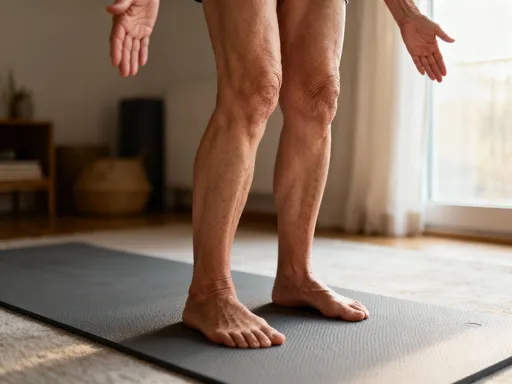
Proper standing alignment begins with the feet. They should be hip-width apart, with weight evenly distributed across the three points of each foot: the heel, the ball of the big toe, and the ball of the little toe. The knees should be soft, not hyperextended, and the pelvis should rest in a neutral position. The spine maintains its natural curves, the shoulders are relaxed and slightly back, and the head is balanced over the shoulders, not thrust forward. This alignment minimizes stress on joints and allows for efficient muscle use.
Walking with awareness enhances this alignment. A healthy gait involves heel-to-toe contact, a slight forward lean from the ankles (not the waist), and arms swinging naturally. Each step should feel grounded and controlled, not rushed or erratic. Practicing mindful walking—even for a few minutes a day—can improve balance, coordination, and postural endurance. Incorporating “postural moments” into daily routines can further reinforce these habits. For instance, using the time spent waiting in line, standing at a sink, or climbing stairs as an opportunity to check in with body alignment. These brief pauses build awareness and turn everyday actions into opportunities for improvement.
Environment Matters: Small Changes, Big Impact
The environment in which we live and work has a profound influence on posture. While ergonomic furniture can be helpful, significant improvements can be made without expensive upgrades. Simple modifications—such as placing books under a laptop to raise the screen to eye level, using a rolled towel as lumbar support, or sitting on a cushion that encourages pelvic neutrality—can make a meaningful difference. The goal is not to achieve perfect ergonomics, but to reduce strain and encourage better alignment through accessible means.
Equally important are behavioral adjustments. The body is not designed to remain in one position for long periods. Research suggests that taking movement breaks every 30 to 45 minutes helps reset posture, improve circulation, and reduce muscle fatigue. These breaks don’t need to be lengthy—standing up, stretching the chest and hips, or walking to get water can be enough to interrupt harmful patterns. Setting a timer or using a smartwatch alert can help establish this habit. Over time, these short interruptions become a natural part of the daily rhythm, preventing the gradual slumping that occurs with prolonged stillness.
Consistency, not perfection, drives progress. It’s unrealistic to expect perfect posture at all times, especially during demanding workdays. What matters is the frequency with which one returns to better alignment. Each time you adjust your posture, you reinforce the neural pathways associated with proper positioning. These small corrections accumulate, gradually reshaping muscle memory and joint function. Over weeks and months, the body begins to favor the healthier pattern, making it easier to maintain without constant effort. The message is clear: progress comes not from flawless execution, but from repeated, mindful correction.
Long-Term Body Repair: Making It Stick
True body repair is not an event, but a process. It unfolds gradually through repetition, patience, and self-awareness. Unlike quick-fix solutions that promise immediate results, sustainable posture improvement requires a long-term perspective. The changes may be subtle at first—a slight reduction in neck tension, improved breathing, or greater ease when standing for long periods. But over time, these small gains compound into significant improvements in comfort, mobility, and overall well-being.
Tracking progress can enhance motivation and provide valuable feedback. Keeping a body awareness journal—where one notes daily sensations, posture habits, and exercise consistency—helps identify patterns and celebrate improvements. Weekly check-ins, such as taking a side-view photo or assessing how clothing fits, offer tangible evidence of change. Tight-fitting shirts may feel looser across the shoulders as posture opens up, or pants may sit more evenly as pelvic alignment improves. These physical cues serve as reminders that the work is yielding results, even when changes are not immediately visible.
Ultimately, posture improvement is a form of self-care—a commitment to treating the body with respect and attention. It is not about achieving an idealized image, but about functioning better in daily life. When the spine is aligned, movement becomes more efficient, energy is conserved, and the risk of injury decreases. This shift enhances not only physical health but also confidence and presence. Standing taller is not just a physical adjustment; it reflects a deeper alignment between how one carries the body and how one engages with the world.
Real posture change doesn’t come from gadgets or willpower. It comes from understanding your body, making informed adjustments, and practicing them consistently. By focusing on function over form, you’re not just standing taller—you’re building a stronger, more resilient body from the inside out.